
Staunton Resident Lookup Record Matches
Each Staunton resident lookup should answer one narrow question at a time. An assessor card names a parcel owner. A court screen shows public status. A historical directory places someone at an address in a stated year, and each record speaks only for itself. None of these alone proves identity. Test a meaningful match against a second custodian, and keep owner, occupant, mailing address, and recorded party as separate roles while you work.
| Record | What It Confirms | Where | Access |
|---|---|---|---|
| Assessor card | Tax parcel owner, assessment, and property description | Staunton assessor database | Online lead; owner is not necessarily an occupant |
| Recorded deed | Conveyance parties, legal chain, and recording details | Virginia SRA or circuit clerk | Clerk record controls; access can require the clerk route |
| Court status | Public case number, party, and displayed event status | Virginia circuit or GDC case search | Locality-specific; restricted matters may be absent |
| Vital record | Event or relationship when the period and requester allow access | VDH, Library of Virginia, or clerk | Public-period and identity limits apply |
| Historical directory | Dated occupant, address, business, or occupation clue | Library, ACHS, and digitized scans | Check spelling, year, and owner distinction |
| Voter lookup | Matched registration status and election information | Virginia Elections | Status tool, not an open resident file |
| License or entity filing | Public credential or legal-entity status | DPOR, DHP, or SCC | Role and record date matter |
Staunton is an independent city. Confirm an address sits inside it before calling an Augusta County result local. The neighbors keep separate assessor, clerk, and court records.
Staunton Court Names Need Locality
Virginia's circuit-case search is a sound first stop when a question turns on a public Circuit Court matter. Pick Staunton as the participating circuit first. Then use a name, case-number, or hearing-date mode. The Circuit Court sits in the 25th Judicial Circuit. The online tool is not a statewide circuit name search. Results can be dated or incomplete, and restricted content stays out of view, so keep the case number and verify the match in the clerk's file.
| Court | Required selection; choose the participating Staunton circuit locality. |
|---|---|
| Party or name | Used for name mode; punctuation, order, and partial matching should follow the current help. |
| Case number | Alternate route when the local case number is known. |
| Hearing date | Conditional search route; page controls the accepted date format. |
| Search mode | Name, case number, or hearing date, after court selection. |
Use the Virginia circuit case search to reach the official locality-selected form.
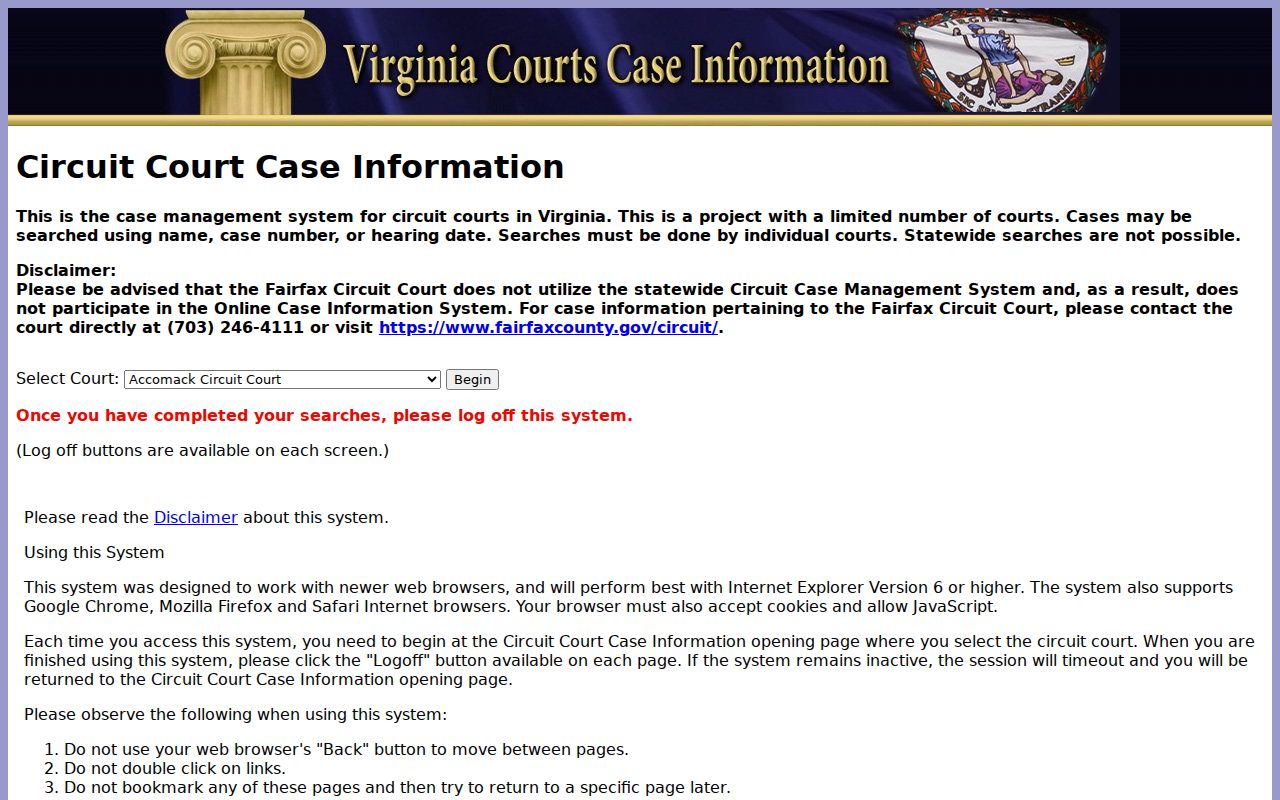
The official screen shows the court selector and search modes. It stands in for nothing; the clerk's case file governs, and a blank search never proves a court record is absent.
Staunton Docket Status Needs a Clerk
The General District Court route also needs the right court or locality. Its name field takes partial entries. The official help requires at least two characters per name. A case number or hearing date can be more precise. Both screens return status information, not a certified court record. The clerk keeps the controlling file. Open the Virginia GDC case search for the official General District Court entry point.
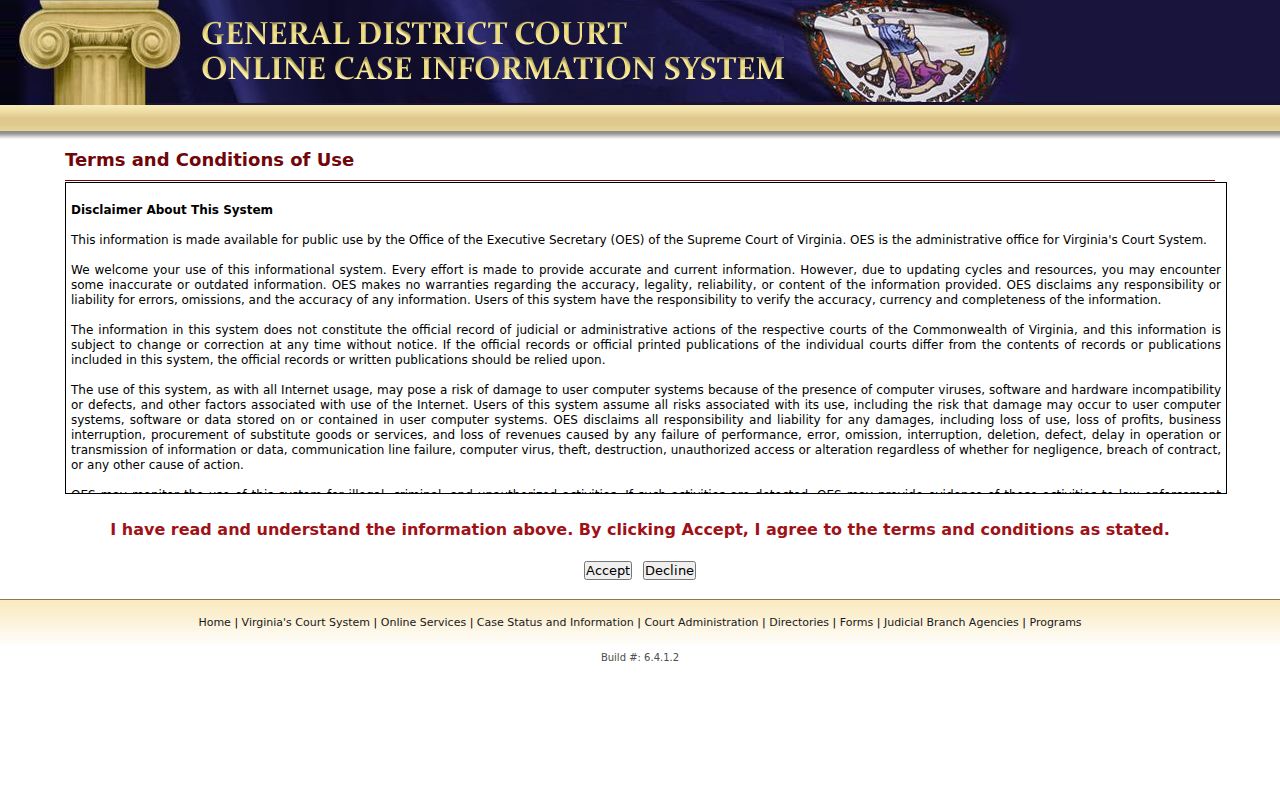
The GDC search route calls for a locality. It also needs a name or case number specific enough to narrow the field. Whatever comes back carries a result date, and that date matters. Dockets shift as hearings move and dispositions land.
A public result can show a fair amount. You get the court and its level, the case number and category, and party names and roles. Dates appear for filings, hearings, continuances, and dispositions. The result also lists the charge or claim description, current status, related events, and clerk contact details. Some material stays off limits. Juvenile matters and domestic-relations cases may be unavailable through any search. The same goes for sealed and expunged records, and for protected victim information.
The Staunton Circuit Court Clerk sits at 113 E Beverley Street, reachable at 540-332-3874. Nonconfidential requests can go by mail, fax, email, phone, or an in-person visit. General District Court shares the same address on the first floor and lists 540-332-3878. Ask for inspection or copies by case number and party name. The clerk's office will handle the rest.
Verifying a Staunton Resident Record
Work in a set order so a same-name hit never becomes an identity claim. Anchor the person to a dated, lawful source first. Then seek an independent record under another custodian. A shared name and ZIP proves nothing. Write down any middle initial, former surname, address date, family clue, or organization tie exactly, and check that it fits both records.
- Define the narrow question: ownership, historical occupancy, court status, credential, vital relationship, or voter status.
- Save the source URL, record date, locality, name spelling, and any case number or parcel identifier.
- Check a different official custodian, such as a deed after an assessor lead or a clerk file after a court-status result.
- Compare roles and dates before treating two results as one person.
- Stop at a conflict, then request the controlling record or record the result as not located.
- Docket
- The court's running case record of filed events, hearings, and displayed status.
- Index versus image
- An index points to a record; an image is a view of the record itself. A public index does not guarantee public images.
- Certified copy
- A copy issued or certified by the custodian under its own process, used when an official copy is required.
- Disposition
- The displayed outcome or current closing status of a case, which should be confirmed with the clerk when it matters.
Staunton Vital Record Time Rules
Virginia Code §32.1-271 sets the clock. Birth records open after 100 years. Death, marriage, and divorce records open after 25. Before those periods, certified-copy access is limited to statutory eligible applicants, immediate family, and authorized representatives as the current form provides. Knowing a name or address does not confer eligibility. The Virginia Department of Health is the issuing office, and Staunton's city FOIA route sends birth and death questions there.
The VDH Office of Vital Records lists a $15 certified-copy or search fee effective July 1, 2026. Its forms call for requester contact information and relationship or authorization. They also want subject details, identification, signature, and payment. VDH and the Library of Virginia do different jobs. VDH issues current certificates and public indexes. LVA holds the surviving historical material, including birth and death records from 1853-1896 and marriage records before 1936. The circuit clerk is a separate local route for its marriage and court-held records.
Note: Treat a public index as a lead, and follow the custodian's age, identity, relationship, and certificate rules before requesting a copy.
Staunton Voter Status Matching
Virginia's voter lookup is a status tool for one matched person. It is not a browsable Staunton resident list. The form asks for first name, last name, date of birth, and ZIP code. A match can return registration status, polling place, districts, election information, and related items. Use the person's own identifying fields. Save the lookup date, since election assignments can change.
Open the Virginia Online Voter Lookup only for that status-confirmation route.
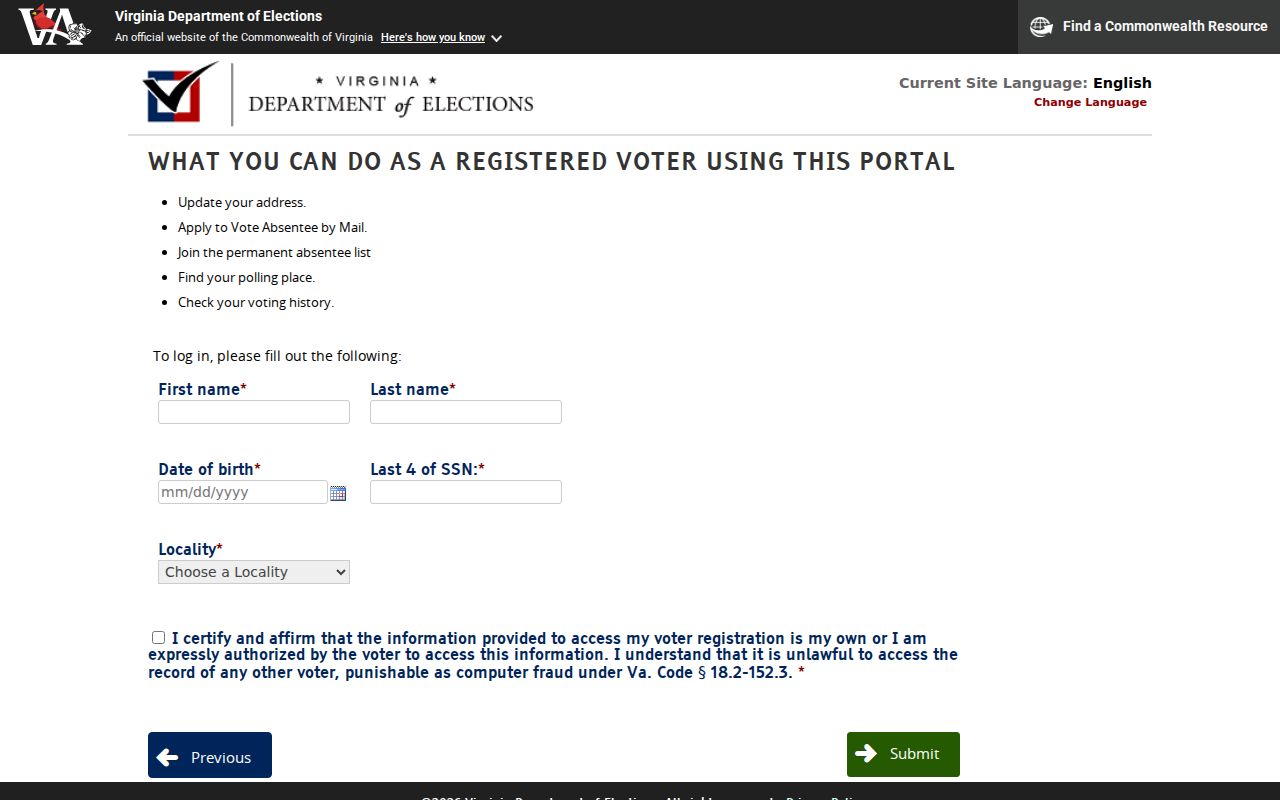
One voter match does not equal a household. The state form is only a status check. Nobody should read it as voting behavior either. Individual records inside VERIS stay restricted under Virginia Code §24.2-404, while §24.2-405 controls who may receive registered-voter lists and for what purpose. A Staunton resident who cannot confirm a status should call the Staunton Registrar at 540-332-3840 rather than guess from property rolls or directory data.
Staunton Credential and Entity Clues
Business filings answer a different question than a resident lookup. The Virginia SCC Clerk's Information System searches legal entities by name or ID. It returns entity type, registered office or agent, formation, status, and filings. Treat that address as an entity contact, not a residence claim. Staunton's BPOL and business-license material sits with the Commissioner of the Revenue. The city publishes no public person or business roster.
For personal credentials, Virginia DPOR searches by name, license number, address, and license type. It offers advanced-search options and update notices. DHP verifies health-profession credentials through its own lookup, with its own restrictions. A credential confirms a license status. It does not confirm where someone lives or tell a life story. Use the Virginia DPOR License Lookup for the public verification route.
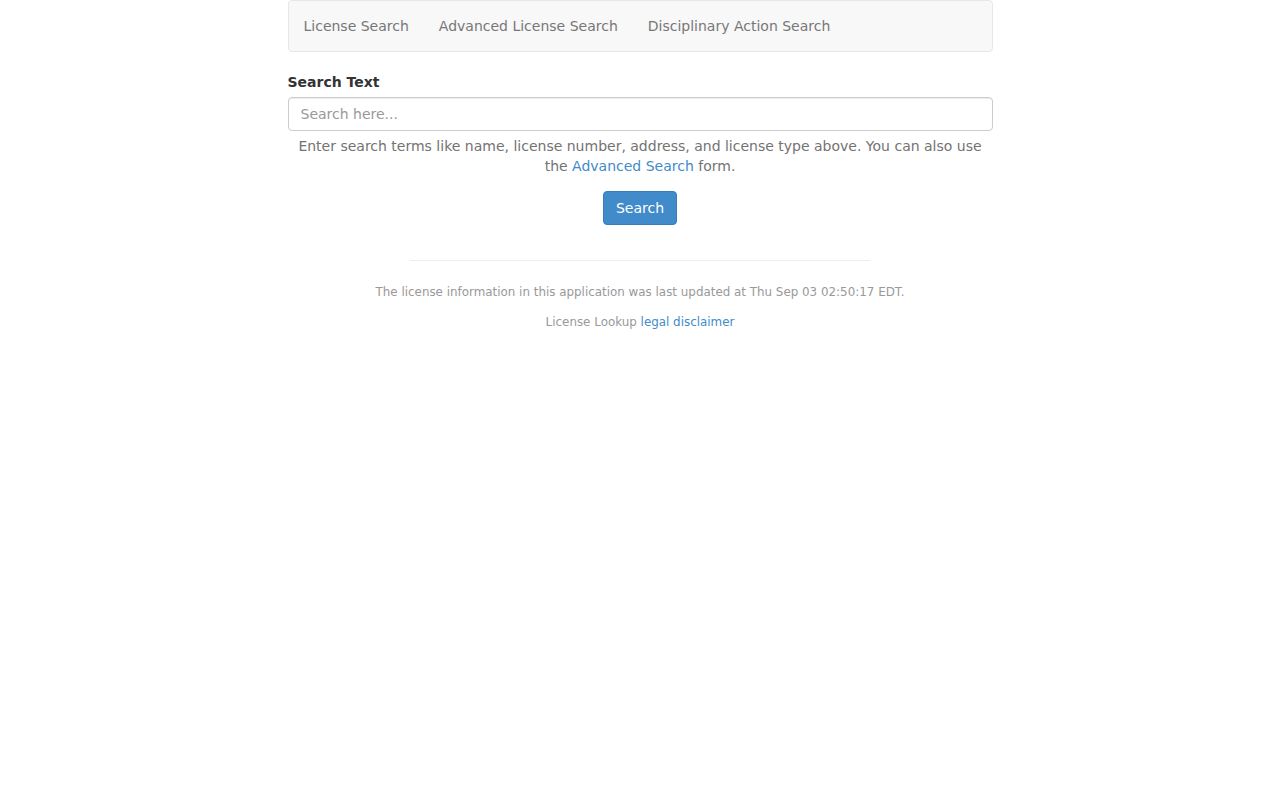
A DPOR result should always keep its license type and record date attached. For health credentials, turn to the separate Virginia DHP lookup. Entity filings belong in the SCC system, so keep the three record types apart.
Staunton Custody and Registry Routes
Custody, notification, and registry systems answer different questions. Staunton publishes no official city jail roster or booking-name portal. Virginia DOC runs a statewide inmate and supervisee locator. Virginia Jail VINE covers local and regional custody plus notifications. The Virginia State Police registry has its own search and map functions. Pick the source that fits the question. Keep its displayed date and limits in view. Open the Virginia DOC inmate and supervisee locator for the statewide search.
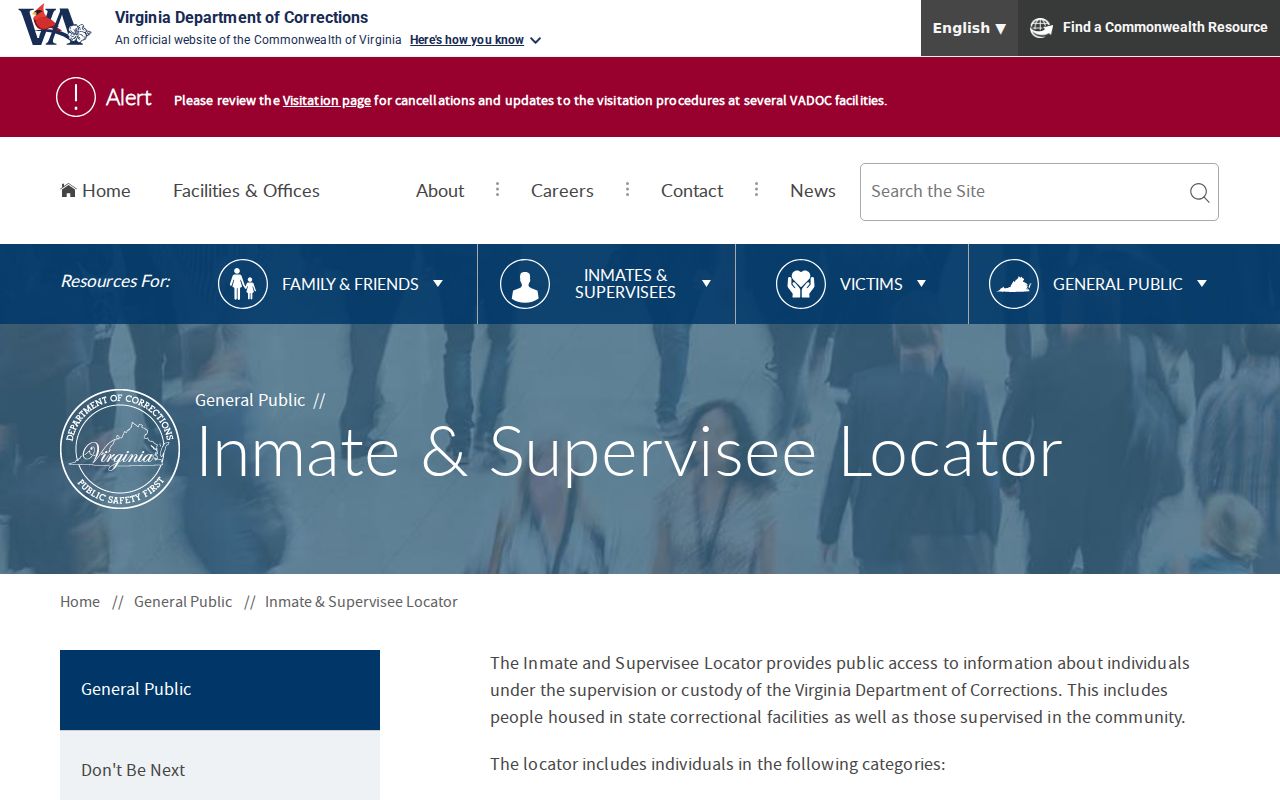
The DOC locator searches a first-name prefix plus last name or DOC ID. Optional filters cover location, race, gender, and age. Its page reports daily updates. Daily updates still do not promise a complete local custody history. Use the Virginia State Police registry only for its separate public-registry search.
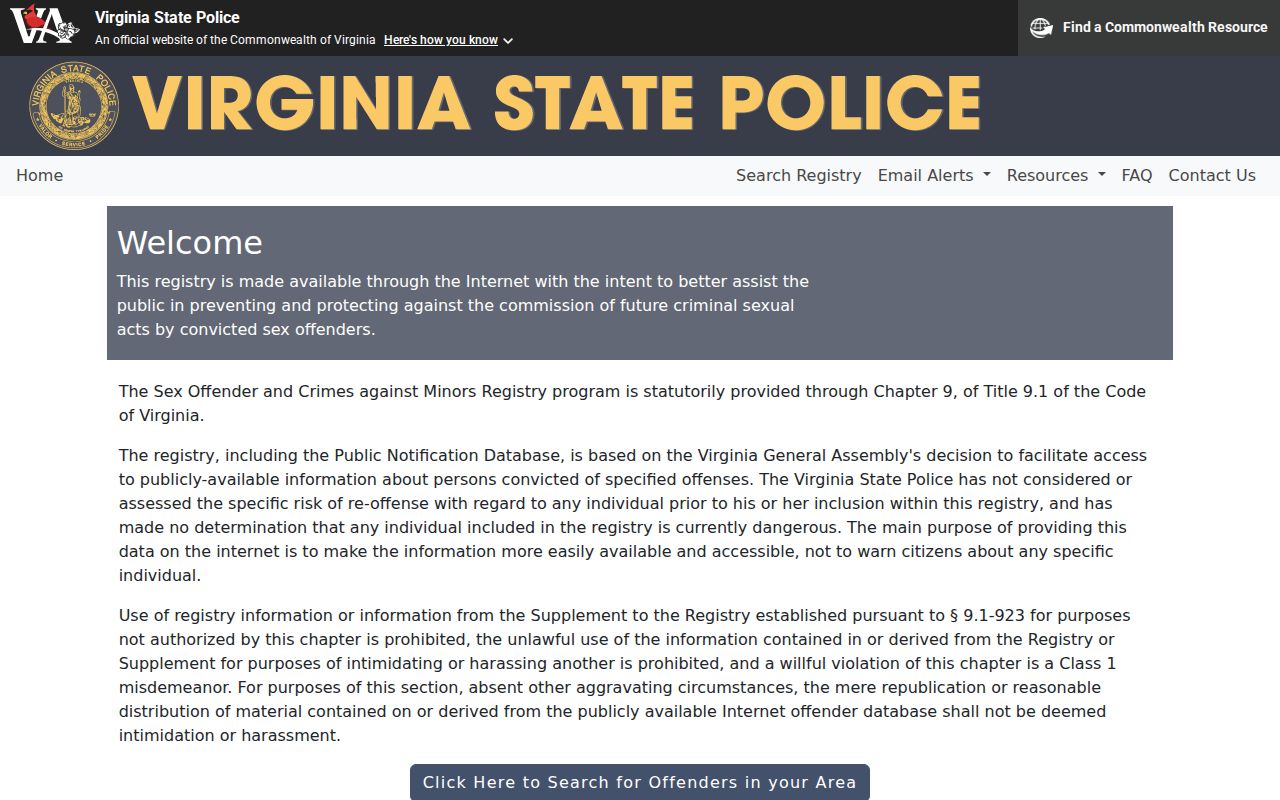
The registry accepts all of these as search terms. Name, registration number, street address, city, independent city, ZIP, or radius: every one works. What it does not do is serve as a residents directory or general resident lookup. Anyone needing custody notifications has a different route. That path runs through Virginia Jail VINE, which handles local and regional jail alerts.
Staunton Historical Person Trails
For a historical person, the Staunton Public Library often beats any current portal. Its first-floor genealogy collection is deep. It holds city, business, and telephone directories. Local-history files, maps, census microfilm, and newspaper microfilm are there too. ACHS adds family, property, church, cemetery, photographic, and related archival material. Staff can connect an obituary, a directory listing, a microfilm reel, a map, or a local-history file. No single online result has to stand alone.
The Staunton directory book collections give the date-by-date address trail. Pair any directory finding with a title-specific newspaper run or an LVA reel. Keep the year and page. No consolidated Staunton obituary index exists. Library microfilm, Chronicling America, ACHS, and cemetery sources are the defensible routes.
Staunton Resident Lookup Safety Limits
Some person records stay closed even when the index around them is public. Virginia's Address Confidentiality Program operates under §2.2-515.2. The Attorney General's program gives qualified victims a substitute mailing address. Do not try to reverse it. DMV personal information, sealed or expunged court files, and juvenile matters all carry their own limits. Protected victim data, adoption records, restricted voter data, and some identifiers in recorded documents do too. A FOIA request cannot override them.
Lawful use. Use a Staunton resident lookup for personal, lawful research and record verification. Using results to stalk, harass, intimidate, or expose a protected person can violate Virginia's anti-stalking law.
When a result looks wrong, go to the office that controls it. The clerk handles court status. The registrar handles voter status, VDH handles vital records, and the license board handles credentials. Some data is held by a private controller. Virginia's consumer privacy law offers a separate correction or deletion process for it. Neither route will quietly rewrite a historic clerk instrument.