
Finding Staunton Residents
Begin with the kind of connection you need. For tracing an address to a current owner of record, the city assessor is the strongest tool. Parcel data ties land to a legal holder. A deed adds the recorded parties and the legal land wording. A dated city directory can place an occupant or a business at an address. It fixes them in a given year. Court portals report public case status rather than a full life story. Staunton residents also surface in limited state systems. These cover voter status, licensed credentials, vital events, custody, and unclaimed-property claims. Each system serves one purpose. A name match in any of them is a lead. It is not proof that every result describes the same person. Keep owner, occupant, mailing recipient, case party, and directory entry as separate labels. First confirm whether an address sits in independent-city Staunton or in adjacent Augusta County. Then record the source URL, the record date, the exact spelling, and the locality. The clerk, the library, and city departments remain important routes. They matter whenever an online screen comes up short or a record predates any portal.
- Verify the city or county jurisdiction for the address.
- Use the assessor or GIS to identify the parcel and its PID.
- Compare the legal description with the circuit clerk land-record route when ownership matters.
- Use library directories, newspapers, and microfilm for a dated household clue.
- Make a specific records request when the relevant record is not online.
Note: A record shows where someone stood on its own date, not where that person lives today.
A fresh lookup tells the present story.
Staunton Residents and City Lines
Staunton became an independent city in 1902. Augusta County records sit right next door, yet they form a separate local-government trail. The Augusta courthouse stands physically in Staunton. Its clerk, assessor, court, tax, planning, and voter records never merge with the city's. A Staunton mailing address or ZIP alone cannot tell you which custodian holds a record. Check the parcel jurisdiction first. This matters especially near the city line or where an older document uses a broader Augusta description. The split matters just as much for historical work. Augusta County's colonial records predate the independent city. City books begin in the early nineteenth century. An ancestor may appear in county material long before any city address existed. Preserve the locality printed on the source. That habit prevents joining two different records simply because a modern address and a historic family name seem to sit close together.
Staunton Residents by Parcel
The City of Staunton assessor database is the practical address-to-parcel entry point for the residents directory. Its search screen relies on live form controls. So confirm the current interface before assuming any particular name, ZIP, or advanced filter will work. The city's 2025 taxable-record publication shows how useful the distinctions run. PID, situs address, owner or co-owner, legal description, subdivision, mailing address, map and tracing number, land value, improvement value, and total assessment each stand as a separate field. Those fields turn a street directory question into a precise parcel lookup. The assessor search capture shows the official database landing screen.

Treat the database as an informational property source that may lag current records. A mailing address can belong to an owner, agent, trust, or business. Never recast it as the physical resident address.
| Parcel field | What it means | Next check |
|---|---|---|
| PID | City property identifier | Carry it to tax and deed research. |
| Situs | Physical property location | Use for GIS and address normalization. |
| Legal description | Land wording such as lot or block | Compare against recorded instruments. |
| Mailing address | Notice destination | Keep separate from situs. |
Staunton Resident Records Offices
Local records are divided among offices rather than stored in one people index. The Circuit Court Clerk keeps deeds, deeds of trust, judgments, wills and probate, marriages, civil and criminal files, and other clerk records. The City Assessor makes assessment information and parcel context legible. The General Registrar administers elections. Virginia's online voter tool works only as a limited individual status lookup, though. Ask each office for the records it keeps. No city office here issues modern certified vital records. Plan the residents directory search around what each custodian actually holds.
Staunton Residents in Court Indexes
Virginia court searches demand the right locality and court level. Staunton Circuit Court belongs to the 25th Judicial Circuit. The city's General District Court handles lower-level matters. Its Juvenile and Domestic Relations Court sits in the 25th Judicial District too. The circuit route offers a court selector plus name, case-number, and hearing-date modes. The General District route also requires a locality selection. Official help notes that a name entry must contain at least two characters. No statewide circuit name search exists to remove that local selection step. So the residents directory trail always runs through the locality first. Virginia circuit case search shows the official locality-selected route.
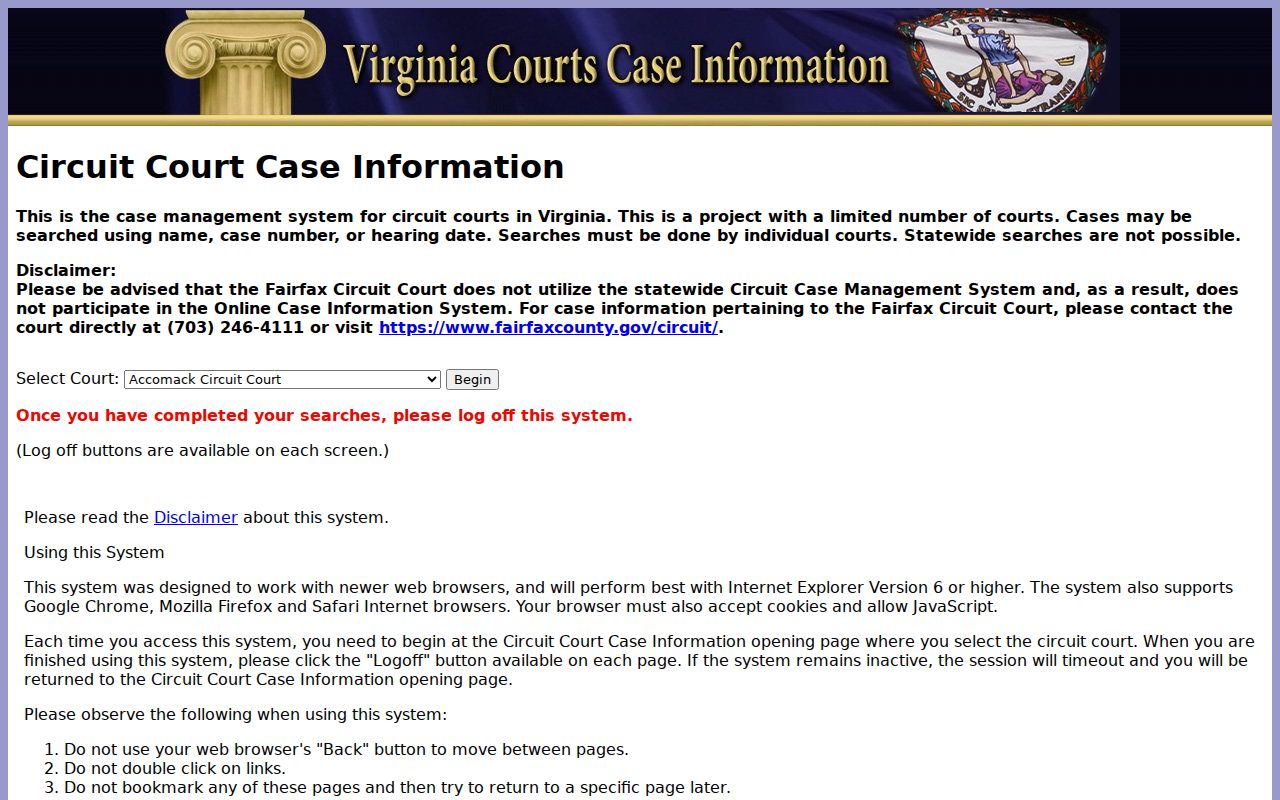
Public status results may list a case number, parties, filing or hearing dates, events, and disposition. The clerk file controls the record. Sealed, expunged, juvenile, protected-victim, and other restricted records may be absent.
Staunton Resident Voter Status
Virginia's user-facing voter lookup is a status tool for a matching individual, not a block or street directory. Enter first name, last name, date of birth, and ZIP, and it can return registration status, a polling place, districts, and election information. Staunton has five wards. Ward geography still cannot be converted into a resident list. Virginia Code §§24.2-404 and 24.2-405 restrict individual VERIS records and voter-list access, so a public request never produces a general download of city residents for the residents directory. The Virginia voter lookup displays the required matching fields.
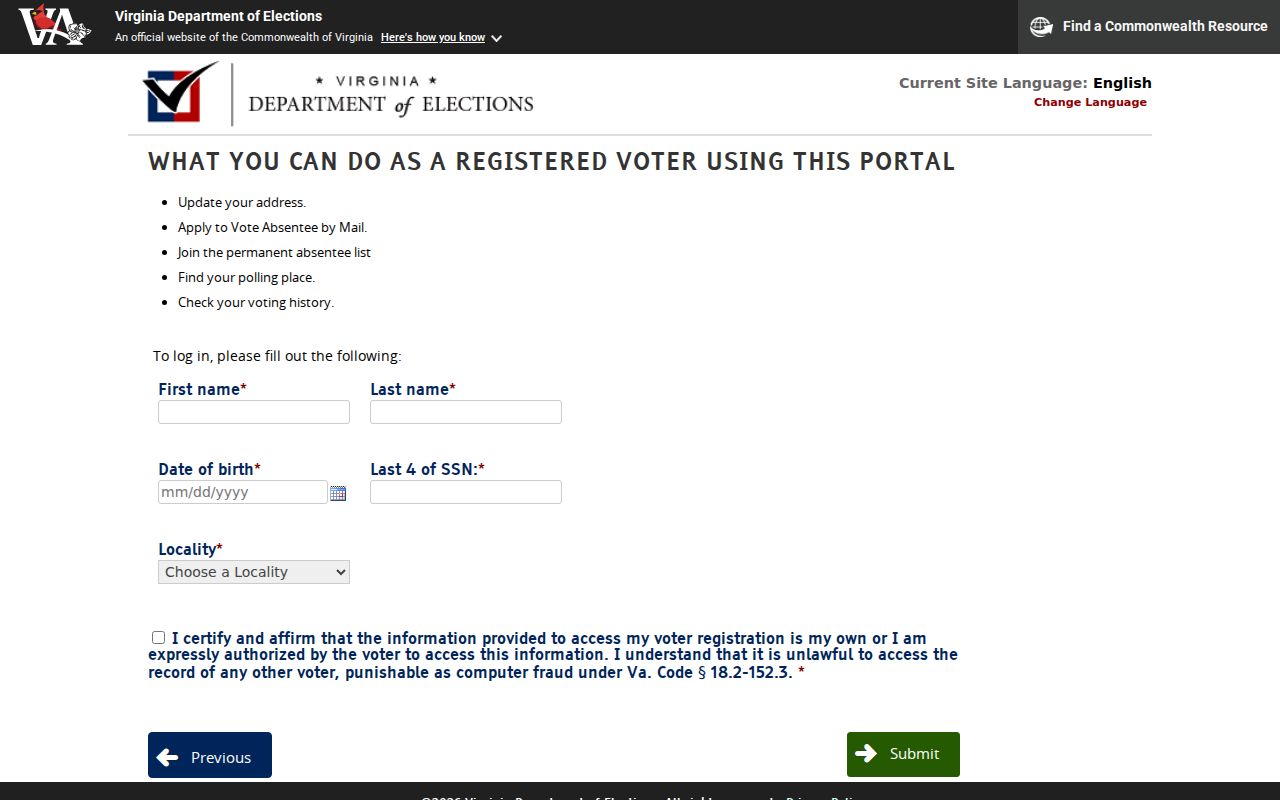
A search that comes back empty is rarely final. Try a former surname or a different spelling. Another date format sometimes works too, or a corrected ZIP. Also confirm the address truly sits in Augusta County rather than a neighboring locality. Staunton registrars can resolve questions a property record cannot answer.
Current Staunton Resident Directories
Staunton keeps no single official roll of every current household. The closest substitutes answer narrower questions. A deed names the owner of record. An instrument lists the parties. A voter file shows matched status. A credential list names a regulated professional, and an entity filing supplies a contact. One Staunton residents directory source can be strong for one role and weak for another. Follow the named custodian, and keep the source date with whatever you copy. Treat any index as a partial tool, not a complete current residents directory.
| Staunton source | Connection shown | Custodian | Access |
|---|---|---|---|
| Property database | Owner, situs, legal description | City Assessor | Online or office |
| Land index | Recorded grantor and grantee | Circuit Clerk | SRA, clerk, or LVA |
| Voter lookup | Matched status and polling data | Virginia Elections | Four-field query |
| City directory | Dated occupant or business clue | Library and archives | Scan or in-person research |
Hunting one person? The Staunton resident lookup workflow fits that job. Chasing an address instead takes the separate street and parcel trail, deed by deed.
Staunton Residents and Vital Records
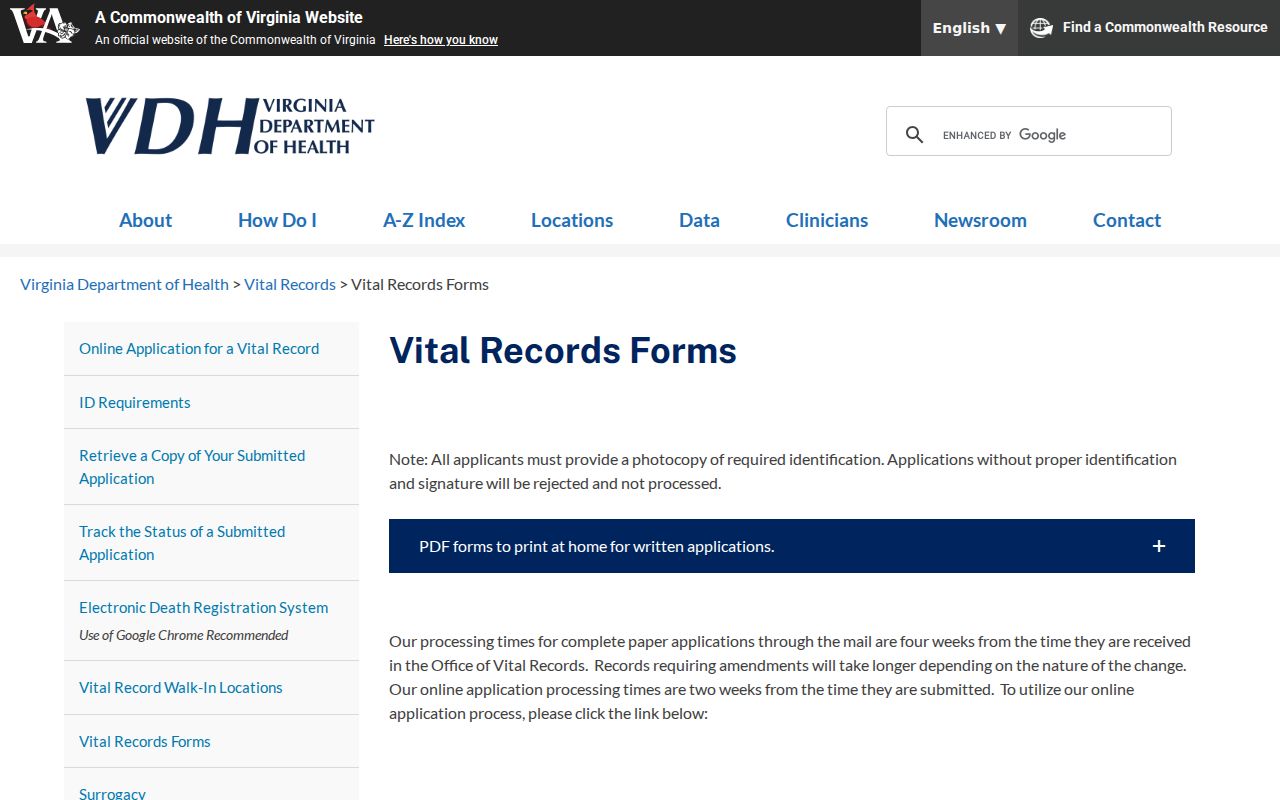
Modern vital records belong to the state, not the city. The Virginia Department of Health issues copies and keeps the public indexes. Under Virginia Code §32.1-271, birth records open after 100 years. Death, marriage, and divorce records open after 25. Certified copies inside those windows require an eligible relationship or legal authority. They also require identification and the current application. A Staunton FOIA request cannot substitute for the state vital-record custodian. The Virginia vital-record forms page carries the current application paths.
For older generations, the Library of Virginia holds surviving Staunton birth, death, marriage, deed, will, and court series on microfilm. A newspaper notice can point the way. It is a lead, though, not a certified record.
Staunton Residents in State Lists
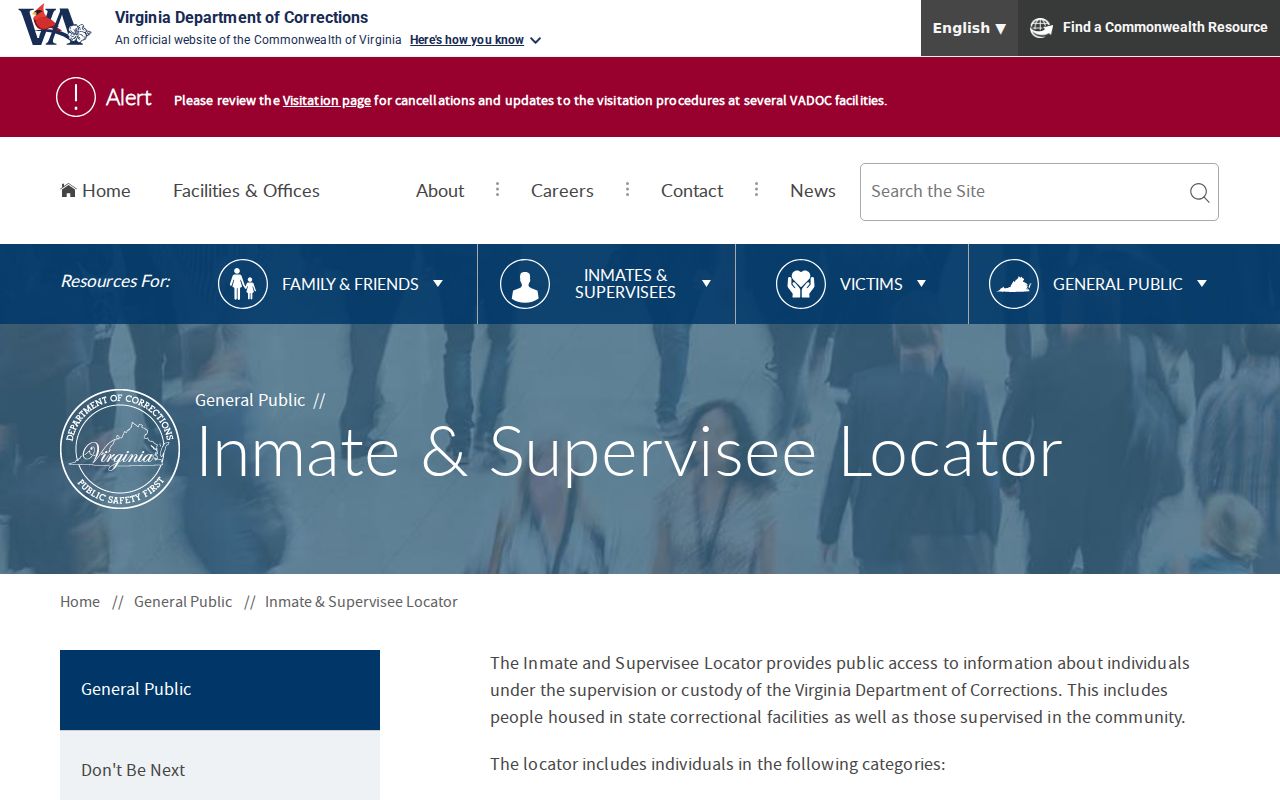
State systems answer one status question each. None of them forms a general city people directory. The Department of Corrections locator takes a first-name prefix plus a full last name or DOC ID, offers optional filters, and posts a daily-update notice. VADOC notification, the local Jail VINE, and the State Police registry are separate systems entirely. No official Staunton booking-name portal exists. Keep any displayed status with its date and the agency's disclaimer. Custody data is not an address history. The Virginia DOC locator is the official statewide entry point for custody and supervision lookups.
Unclaimed property offers one more narrow path. A name search may surface a potential claim in Virginia's system. The claimant still has to prove identity and ownership. The Virginia unclaimed-property claim search handles that workflow.
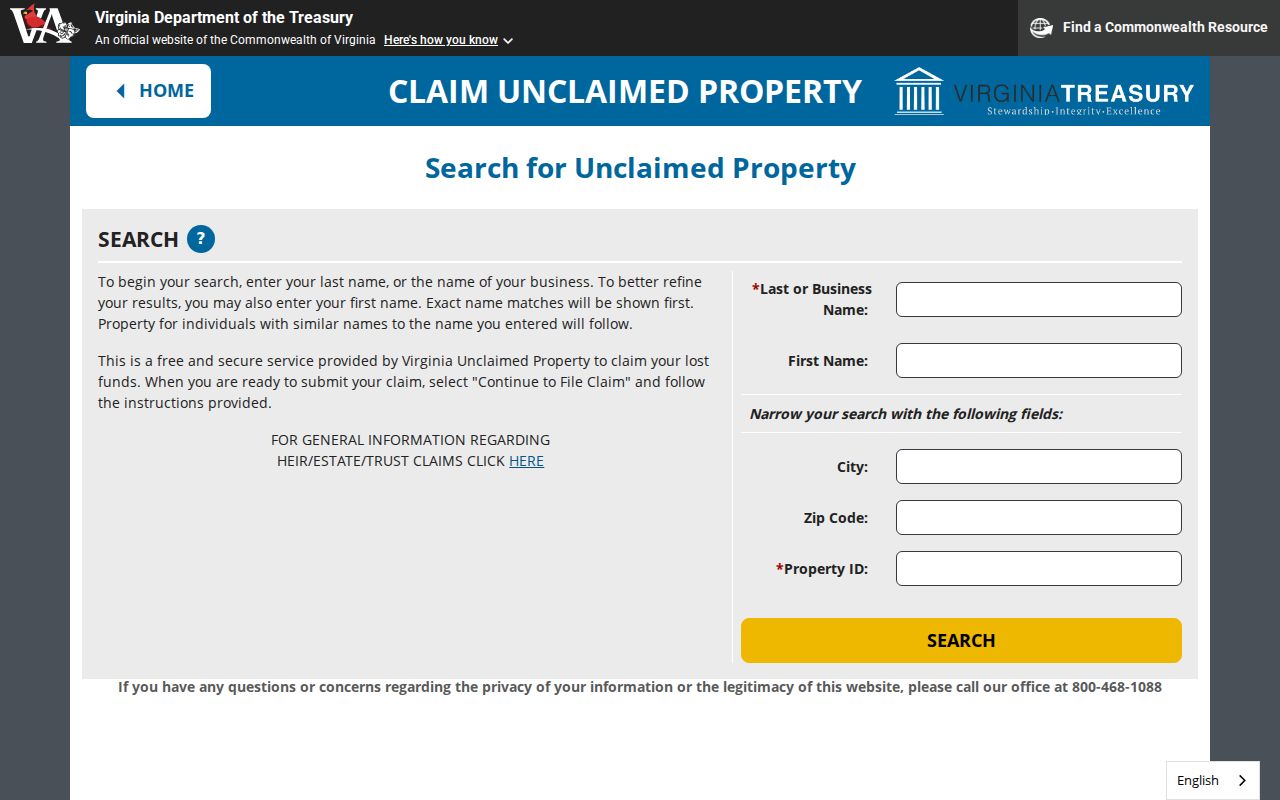
The search result does not prove a current residence, relationship, or entitlement.
Checking Staunton Resident Leads
Commercial people-finding services produce leads, nothing more. They name no reliable custodian and attach no record date. They also flag no restriction. An official index behaves differently. It names the office and the person's role in the record. Library and archive sources preserve the page, volume, or reel that historical work demands. Before concluding anything, check the lead against a different custodian. That matters most when the same names repeat across Staunton city and Augusta County records.
| Source type | Useful role | Still verify |
|---|---|---|
| Official index | Find a locator or narrow status | Date, exceptions, and controlling file |
| Library or archive | Trace a dated household | Edition, spelling, and context |
| Commercial result category | Possible lead only | Every fact against an official or archival record |
Know when to stop. If shared names cannot be separated by an address date, identifier, family connection, or independent record, no conclusion is safe.
Staunton Resident Record Requests
A missing portal record is not a dead end. Send the custodian a focused request instead. Virginia FOIA, Va. Code §§2.2-3700–2.2-3715, demands reasonable specificity. Name the locality, office, record type, address or PID, any relevant person, and the date range. Also state your preferred format. Say whether you want inspection or copies. Under §2.2-3704, the normal response period runs five working days. Statutory response options and limited extensions are available. An office may charge actual reasonable costs and request an estimate or deposit above $200. The City of Staunton routes records requests by category custodian. For nonconfidential clerk-held records, the clerk accepts mail, fax, email, phone, and in-person requests. For older books and indexes, go to the Library of Virginia microfilm, the local library, or an archive. Do not ask an office to build a new historical index. Requesting a record already maintained beats asking a custodian to untangle a family-history puzzle. Note: Virginia FOIA cannot override a separate confidentiality rule protecting voter, court, vital, adoption, DMV, or victim records.
Historical Staunton Resident Directories
Digitized Staunton city directories span the late nineteenth and early twentieth centuries. The Augusta County Historical Society portal links volumes from 1895 through 1934, including 1895, 1896–97, 1899, 1904–05, 1910–11, 1916–17, 1922–23, 1927, 1929, 1931, and 1934. A separate Library of Congress HABS report says directories existed for most years from 1940 through 1983 and placed them in the Clerk's Office basement at survey time. Their current custody and publishers still need confirming. A directory shows an occupant, business, or address as of publication. It proves neither present residence nor recorded ownership. The Staunton Directory Book details the volumes and research routes.
Staunton Residents at the Library
Staunton Public Library keeps a genealogy collection on the first floor. It gathers city and business directories, maps, local-history files, telephone directories, census microfilm, and newspapers. Reference holdings include Augusta-area census microfilm from 1810 to 1930. They also hold Staunton newspapers from the late 1700s onward. The reference desk works from a name variant, a former street name, an approximate year, an occupation, or an organization. That helps staff pick the right source. The step is human. It can carry a directory clue to a microfilm reel or a historic map.
- Roll
- A list made for one defined purpose, not a census of every household.
- Index
- A finding tool that points to a record, book, image, or case number.
- Parcel
- A defined piece of land identified by a PID or legal description.
- Criss-cross directory
- An address-oriented directory format; no verified Staunton volume with that exact label was located.
Staunton Deed Alert
Staunton property owners gained a useful tool in March 2026. The city announced VADeed Alert. It is a free service that sends email notices when a new filing touches a registered name or parcel. Registration is simple. You can sign up with a name or a PID. The PID itself comes from the assessor database. An alert only flags a filing for review, though. It never replaces the recorded instrument. And it is no substitute for verification by the clerk of court.
Entity names sometimes surface along a property trail in Staunton. Virginia's SCC system can show an entity's filings and its registered-agent role. But that does not prove anyone lives at the entity's address. To search those records, start at the Virginia SCC Clerk's Information System. It is the official entry screen for entity lookups.
A deed question in Staunton calls for two things. Keep the PID and the legal description handy, then ask the circuit clerk for the controlling land record.